
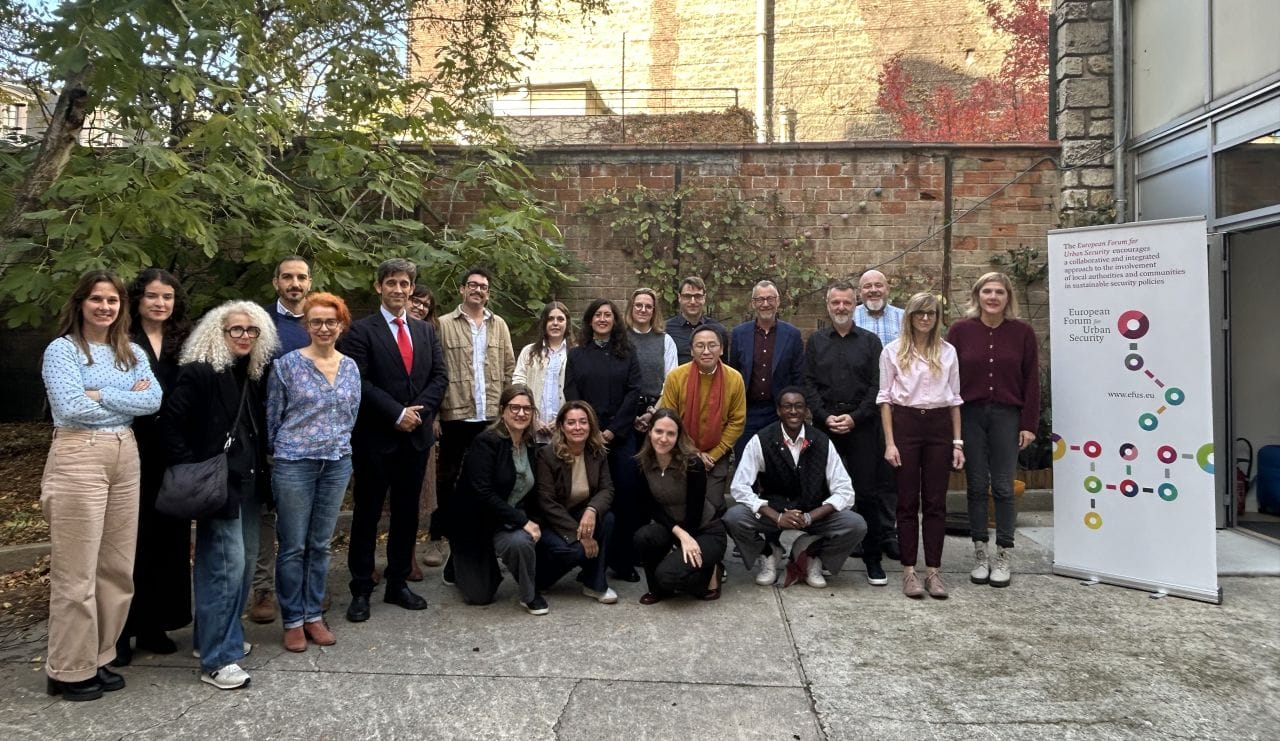
On 28 October 2026, partners of the new Horizon Europe project PRISM – Preventing drug market-Related violence and other harms through Innovative Strategies at the Municipal level – met in Paris for the project’s in-person kick-off meeting. The project is coordinated by the European Forum for Urban Security (Efus), with the Institute for Research and Development “Utrip” participating as one of the consortium partners.
PRISM addresses a growing challenge for European cities: violence and other health, social and security harms associated with drug markets. Pilot activities in Barcelona, Brussels, Lisbon and Montpellier will help the consortium better understand local contexts, identify promising responses and develop practical tools and strategies for municipalities and frontline stakeholders.
From a prevention perspective, PRISM is particularly relevant because sustainable responses cannot rely only on reacting to crime and violence after they have occurred. Cities need to better understand the underlying risk and protective factors, vulnerabilities of young people and communities, and the social and institutional conditions that shape local drug markets.
This is also an important investment in future generations. Young people growing up in communities affected by exclusion, violence, criminal recruitment and fragmented services may face significantly greater risks. Effective prevention therefore requires coordinated action across municipal authorities, law enforcement, health and social services, civil society and communities.
UTRIP will bring its expertise in prevention science, evidence-based prevention and professional capacity building to the project. In particular, UTRIP will lead the development and adaptation of innovative teaching methods and training modules and will contribute to the delivery of the project’s hybrid training programme for local practitioners and stakeholders in the four pilot cities.
Through research, capacity building and stronger multi-sectoral cooperation, PRISM aims to help cities move from fragmented and reactive responses towards more evidence-based, coordinated and preventive approaches to drug market-related violence and other harms.